🎉 LIMITED OFFER — Ends July 31
Subscribe to ClipprOS today and get 1 month FREE on any plan. 3-day free demo, then real access with a bonus month included. See pricing →
You sit in the chair, the barbero asks what you want, and you say the four most dangerous words in men's grooming: "Ikaw na bahala, boss."
Sometimes that gamble pays off. Often, you walk out with a fade two levels higher than you wanted.
The fix is not finding a mind-reading barber. It is knowing exactly what to ask for.
A fade haircut has a simple logic — where it starts, how short it goes, and how fast it blends. Once you can name those three things, any good barber can deliver.
This guide is for anyone deciding which fade to get, and anyone tired of explaining their usual cut from scratch every visit.
In this guide, we'll cover every fade type, what guard numbers actually mean, how to brief your barber like a pro, and how often to refresh your cut.
What You'll Learn
- —The difference between low, mid, high, and skin fades
- —What separates a taper from a fade
- —What guard numbers mean in actual millimeters
- —How to describe your cut so any barber gets it right
- —How often to refresh a fade to keep it sharp
What a Fade Haircut Actually Is
A fade is a gradual transition — hair that goes from longer on top to very short (or bare skin) at the bottom, with no visible line where the lengths change.
- —The "fade line" is the height on your head where the shortest part begins
- —Everything below that line gets progressively shorter toward the neckline and ears
- —The top can be anything — curly, brushed up, curtained, or two block — the fade only describes the sides and back
- —The skill is in the blend: a good fade has no steps, bands, or hard edges
That is why the same word covers dozens of looks. The fade is a technique, not a single style.
Low Fade: The Safe, Clean Choice
The low fade starts just above the ears and follows the hairline around the head.
- —Keeps the most hair on the sides — subtle and professional
- —Works with office dress codes and conservative workplaces
- —Flatters most face shapes because it barely changes your head's outline
- —Grows out gracefully, so it forgives a missed trim
If it is your first fade, start low. You can always go higher next visit.
Mid Fade: The Filipino Favorite
The mid fade starts around the temples — roughly the widest part of your head.
- —The balance point: noticeable contrast without going dramatic
- —Arguably the most-requested fade in Philippine barbershops
- —Pairs well with textured crops, curtain fringes, and two block styles
- —Sharpens round faces by adding visible structure at the sides
When in doubt between low and high, the mid fade is the answer most barbers would give.
High Fade: Maximum Contrast
The high fade starts near the top of the sides, leaving a bold band of short hair almost to the crown.
- —The most dramatic standard fade — the top becomes the entire show
- —Loved by athletes and anyone who wants a defined, low-maintenance side profile
- —Exposes more scalp, so scars or uneven patches will show
- —Demands more frequent refreshes because regrowth is obvious
Commit to the maintenance before you commit to the height.
Skin Fade: Down to Zero
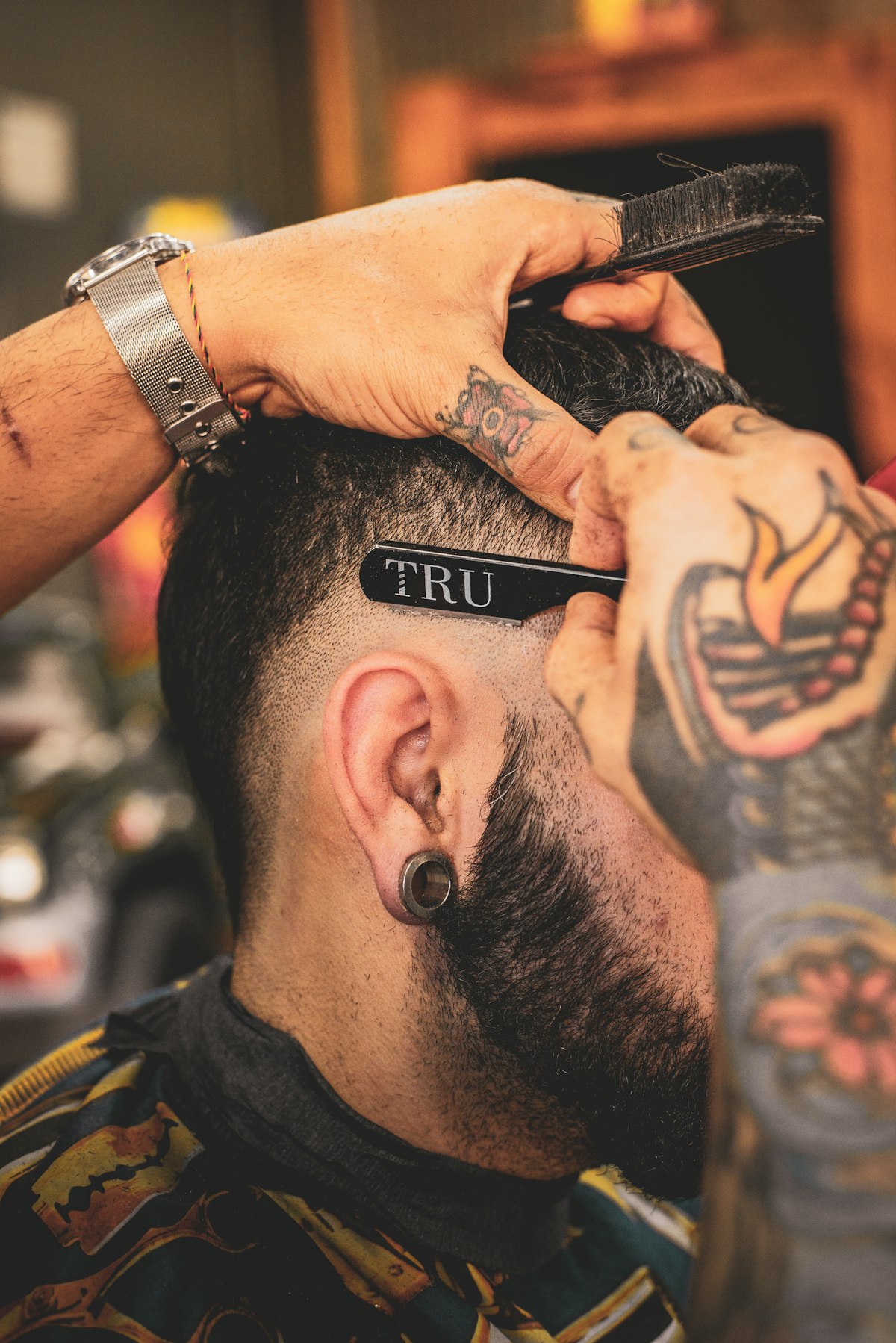
A skin fade — also called a bald fade — blends all the way down to bare skin, usually finished with a razor or foil shaver.
- —Can be low, mid, or high; "skin" describes the shortest point, not the height
- —The crispest possible finish, especially in the first week
- —Grows out fastest — stubble appears within days
- —Best done by a barber with a steady blade hand, so choose carefully
Skin fades photograph beautifully. They also book the most repeat visits — plan accordingly.
Taper vs. Fade: What's the Difference?
Every taper is gradual, but not every gradual cut is a fade.
- —A taper shortens hair gradually only around the sideburns and neckline — the sides stay mostly one length
- —A fade takes the sides and back much shorter, with the blend covering a larger area
- —A taper is the subtler, more conservative cut; a fade is the bolder one
- —Say "taper lang sa gilid" for a taper; name the height ("mid fade") for a fade
If you want barely-there cleanup, ask for a taper. If you want visible contrast, ask for a fade.
How to Tell Your Barber Exactly What You Want
Guard numbers are the shared language of the chair — each number is a clipper attachment measured in millimeters.
- —Common guards: #1 is about 3mm, #2 about 6mm, #3 about 10mm, #4 about 13mm; "zero" or "skin" means no guard
- —Name the height and the bottom length: "mid skin fade" or "low fade, #1 at the bottom"
- —Say what happens on top: trim, texture, or leave the length
- —Show a reference photo — thirty seconds of scrolling beats five minutes of describing
- —Photograph your cut on a good day, from the side and back, and reuse it as your reference
One clear sentence plus one photo gets you the same cut in any chair in the country.
How Often Should You Refresh a Fade?
Fades are sharpest in week one and quietly disappear by week four.
- —Skin and high fades: every 1–2 weeks to keep the contrast crisp
- —Mid fades: every 2–3 weeks for most hair types
- —Low fades and tapers: every 3–4 weeks is usually enough
- —Fast growers may need a neckline-and-edges cleanup between full cuts
Booking your next visit before you leave the chair is the easiest way to never look grown-out.
Why Fades Go Wrong
Almost every fade horror story traces back to the same few mistakes.
- —Vague instructions — "medyo maikli lang" means something different to every barber
- —No reference photo, so the barber fills the gaps with their own default
- —A new barber who has never seen your head before and gets no briefing
- —Naming a style you saw online without knowing its height or guard — some trends only suit certain hair types
- —Skipping the mirror check at the end instead of asking for small fixes on the spot
None of these are expensive to avoid. All of them are annoying to grow out.
How to Get the Same Great Fade Every Time
- —Save a photo of your best-ever cut — side and back views
- —Learn your numbers: the fade height and the guard at the bottom
- —Book the same barber instead of taking whoever is free
- —Book ahead instead of walking in, so your barber is not rushing your blend
- —Ask for the mirror at the end and request tweaks before you stand up
- —Refresh on schedule instead of waiting until it is obviously grown out
Why Booking Beats Walking In for a Great Fade
The best fade of your life is a team effort between you, your barber, and a little memory.
Shops on ClipprOS keep a haircut memory for every client — your fade type, guard number, and reference photos on file — so any barber in the shop can pull up your usual cut instead of making you re-explain it. You can also browse shops and barbers, check their portfolio, and book a specific barber's chair in advance.
Walk-ins will always exist. But the guys with consistently great fades are usually the ones with a booking and a saved reference.
Find a Barber Who Remembers Your Fade
Your perfect fade should be a repeatable order, not a lucky accident. Browse Philippine barbershops, view real portfolios, and book a barber who will keep your cut on file. Learn more by visiting:
https://getclippr.app/explore
Conclusion
A fade haircut is three decisions — where it starts, how short it goes, and what stays on top. Now you can name all three.
Clear words, a reference photo, and the right guard number turn any decent barber into your barber.
Pick your fade, book the chair, and stop gambling with "ikaw na bahala."
FAQ
What is a fade haircut?
A cut where the sides and back gradually go from longer to very short — or bare skin — with a smooth blend and no visible lines between lengths.
What is the difference between a low, mid, and high fade?
The starting height of the blend. Low starts above the ears, mid around the temples, and high near the top of the sides — the higher it starts, the bolder the contrast.
What is a skin fade?
A fade that goes all the way down to bare skin at its shortest point, usually finished with a razor or foil shaver. It can be low, mid, or high.
Is a taper the same as a fade?
No. A taper only shortens the sideburns and neckline gradually, while a fade takes the whole sides and back short with a larger blend area.
What fade should I get for my first time?
A low or mid fade. Both are easy to wear, flatter most face shapes, and grow out gracefully while you decide if you want to go higher.
What do clipper guard numbers mean?
Each guard number is a blade attachment length — commonly #1 is about 3mm, #2 about 6mm, #3 about 10mm, and #4 about 13mm. Zero or "skin" means no guard.
How do I ask my barber for a fade?
Name the height and the shortest length, then describe the top — for example, "mid fade, skin at the bottom, trim the top and keep the fringe." A reference photo removes all doubt.
Does a fade haircut suit a round face?
Often, yes. Mid and high fades add structure at the sides, which visually lengthens a round face. Keeping some height on top strengthens the effect.
How often should I get my fade refreshed?
Skin and high fades every 1–2 weeks, mid fades every 2–3 weeks, and low fades or tapers every 3–4 weeks, depending on how fast your hair grows.
How long does a fade haircut take?
Typically 30–60 minutes. Skin fades and detailed blends take longer than simple tapers — rushing is the enemy of a clean blend.
Do fades work with curly Filipino hair?
Yes. Fades pair well with curly and wavy textures — the short sides frame the texture on top. Ask for a slightly longer top if you want the curls to show.
What is a burst fade?
A fade that curves around the ear in a semicircle, leaving the neckline longer. It is the signature side profile of many modern mullet and fringe styles.
What is a drop fade?
A fade whose line drops lower behind the ear, following the head's natural curve. It looks rounded and clean from the side.
Can I get a fade with a two block haircut?
Yes. Many Filipino barbers cut two block styles with a low or mid fade on the sides instead of the traditional undercut for a cleaner blend.
Why did my fade look different from the photo I showed?
Usually hair type, head shape, or a different starting height. Tell the barber what to match in the photo — the height and the shortest length — not just the overall vibe.
Should I wash my hair before a fade?
Clean, dry hair helps the barber read your natural growth and blend accurately. Many shops will wash it for you as part of the service.
How do I maintain a fade between visits?
Keep the neckline tidy if you can, style the top as usual, and book your refresh on schedule. There is no product that stops the sides from growing.
Are fades more expensive than regular haircuts?
Often slightly, because the blending takes more skill and time. Prices vary by shop and city, so check the shop's service list when booking.
How do I find a barber who is good at skin fades?
Look at portfolios, not signage. Barbers who are proud of their fades post them — photos of clean blends are the most honest credential a barber has.
Where can I book a fade haircut near me?
Browse Philippine barbershops, compare barber portfolios, and book online at https://getclippr.app/explore — shops on the platform keep your fade details on file for next time.